Play a Duet
Design and direction · July 2026–present
You're in a lighthouse looking at six brass cams. Each one makes the lamp blink in a different rhythm, and none of them are labeled. There's another lighthouse out on the water already blinking, and you have to answer it in the same rhythm. You can't see it. It's on the other person's screen.
So they describe it. Two quick ones, then a gap? You mount the cam you think that is, pull the lever, and find out.
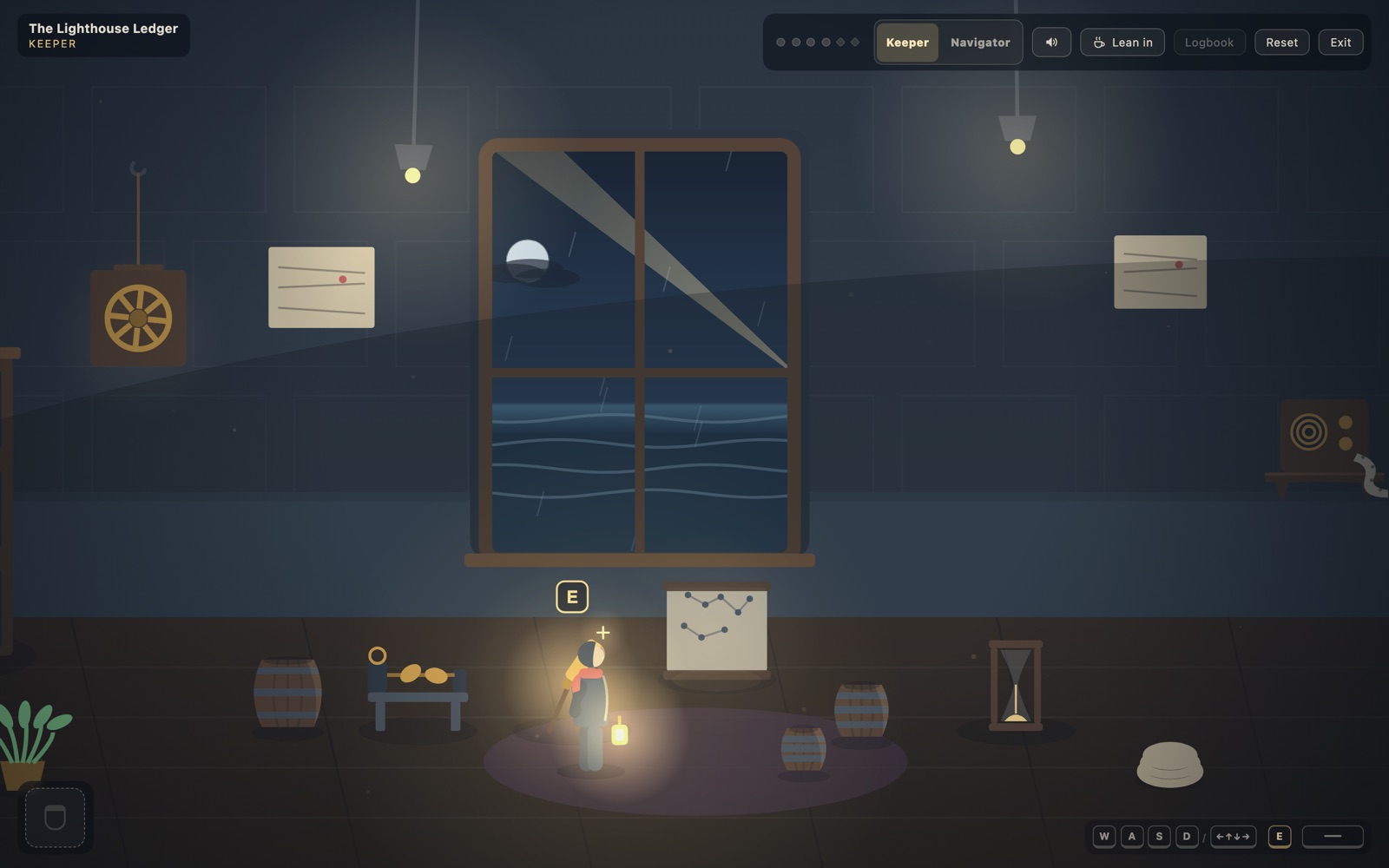
That's the first puzzle in Lock & Letter, the game at playaduet.com. Three escape rooms for two people, 30 to 60 minutes each, free in a browser. You both open the same page, get on a call, and end up in different rooms. I made it because my girlfriend and I kept looking for a game we could play together over a call and kept not finding one.
One rule
The thing you operate and the instructions for it are never on the same screen. Neither of you can solve anything alone, and neither of you ends up watching the other person play.
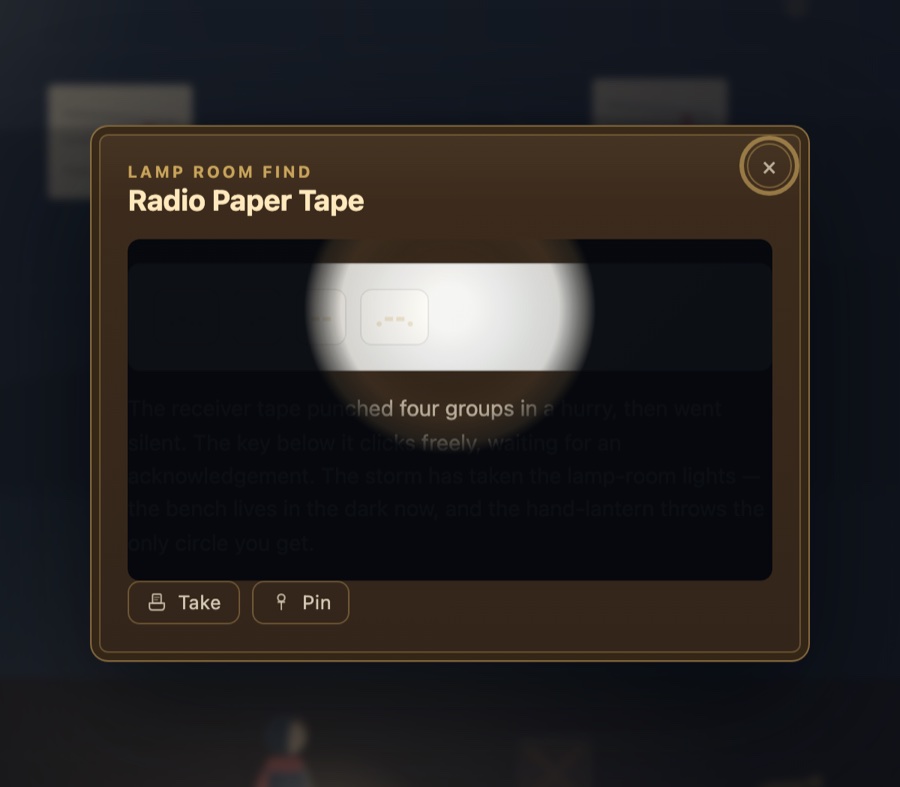
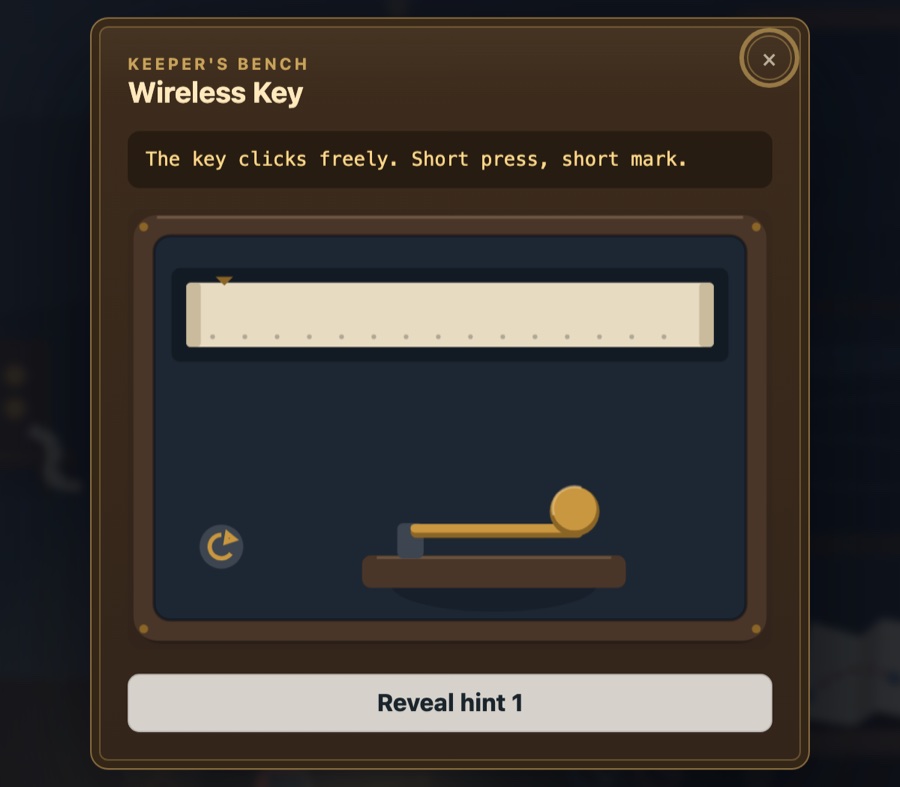
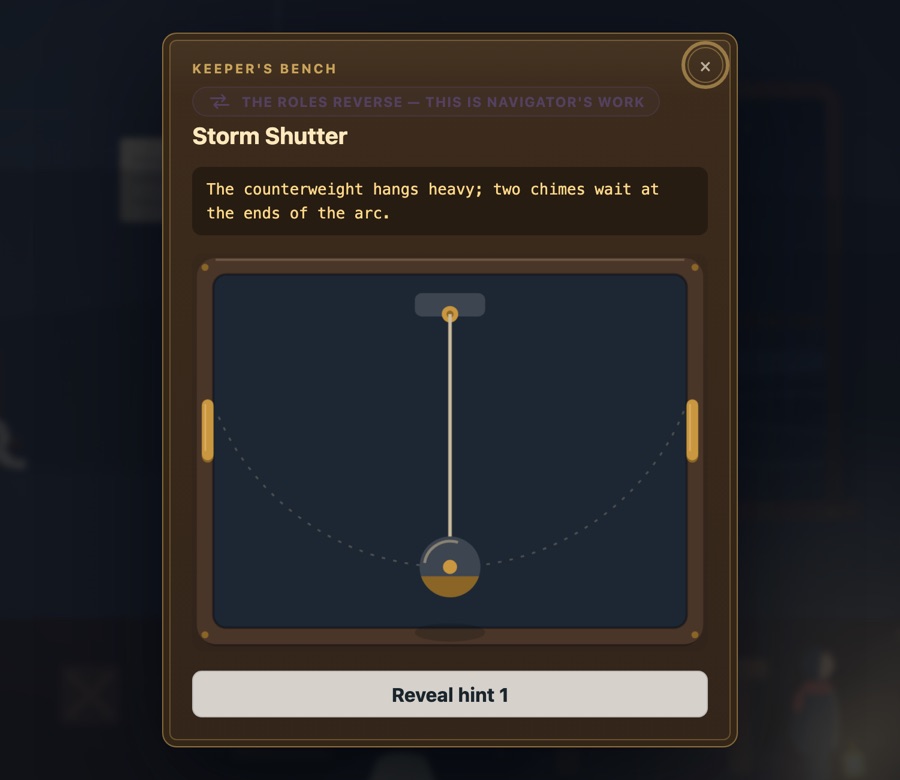
The three rooms
They unlock in order. The equipment list is one line: a voice you trust on the other end of a call.
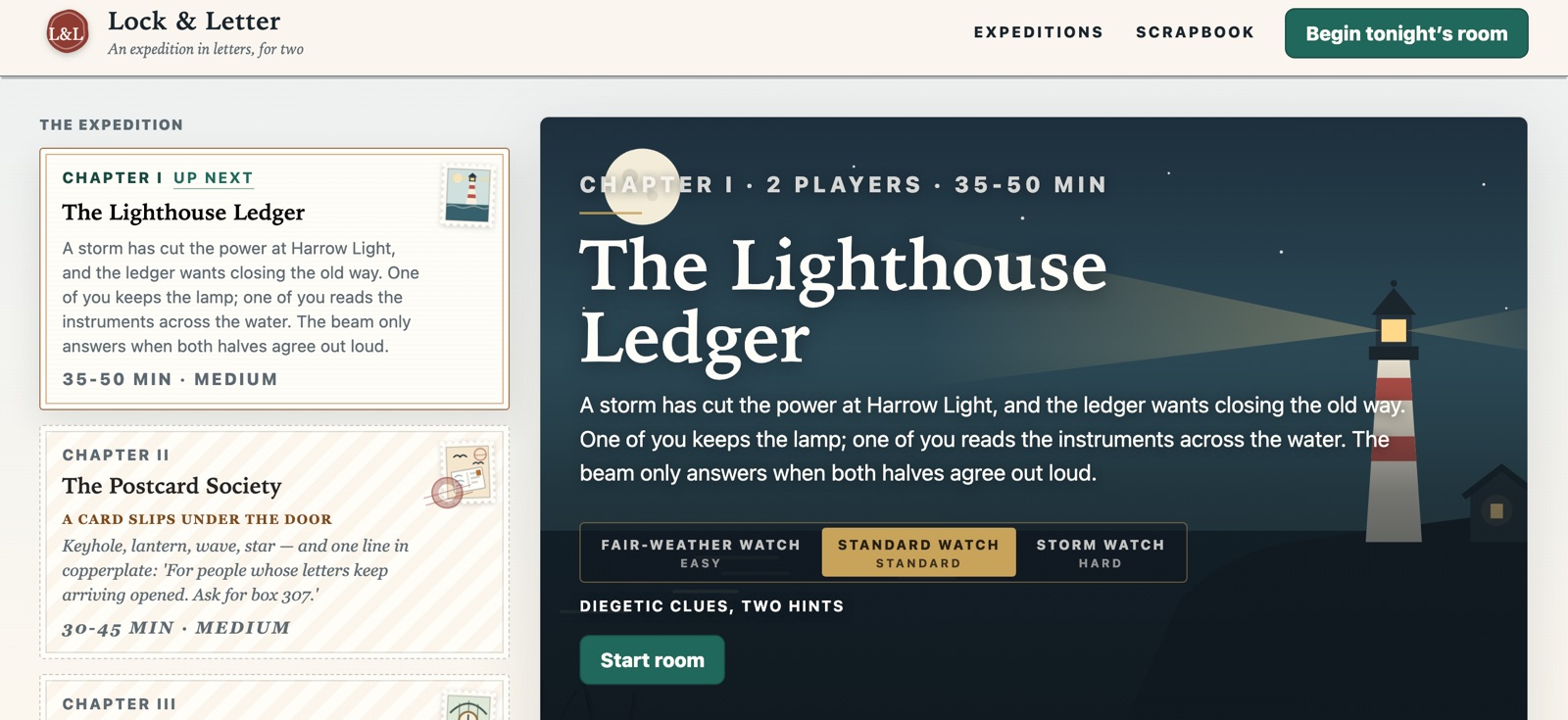
- The Lighthouse Ledger (35–50 min). One of you keeps the lamp; the other reads the instruments across the water.
- The Postcard Society (30–45 min). A mail club that receives postcards from places that shouldn't exist. One works the archive desk, the other sorts the route.
- The Conservatory Clock (45–60 min). A greenhouse clock rewinding an inherited garden. The longest of the three.
How it works
No puzzle has an answer box. A stage opens when the mechanism is in the right state: cams mounted in order, four punched cards lined up over a lightbox, a key filed down until it clears all five pins. An answer box would turn every puzzle into a password check, and then you stop describing the thing in front of you and start reading letters at each other.
There's no server either — no accounts, no room codes, nothing that breaks when somebody stops paying a host. Almost all the coordination happened when I wrote the rooms. If the reading you need is only printed on the other page, there's nothing to sync.
I designed the rooms, wrote the letters, and specified what each mechanism had to do. Coding agents I directed wrote the 21,000 lines of JavaScript and 4,600 of CSS underneath, in a day.